

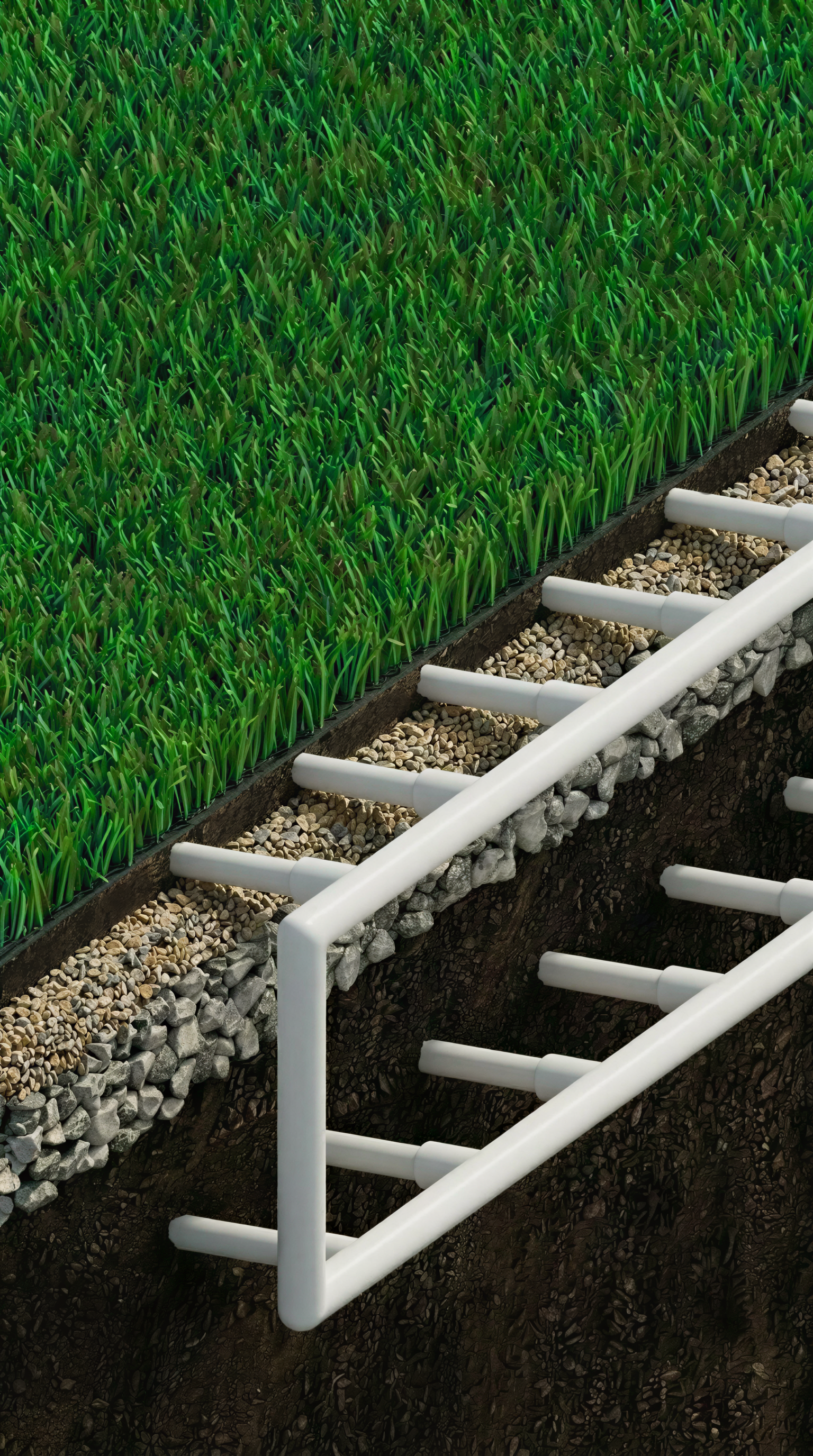

Sports facilities lack an effective solution for the high surface-level temperatures of artificial turf during hot days. Cooldown° is a cooling system that reduces surface temperatures, allowing athletes to play comfortably.
Duration
16 weeks
Disciplines
Research
System Design
Prototype
CONTEXT
Youth Sports
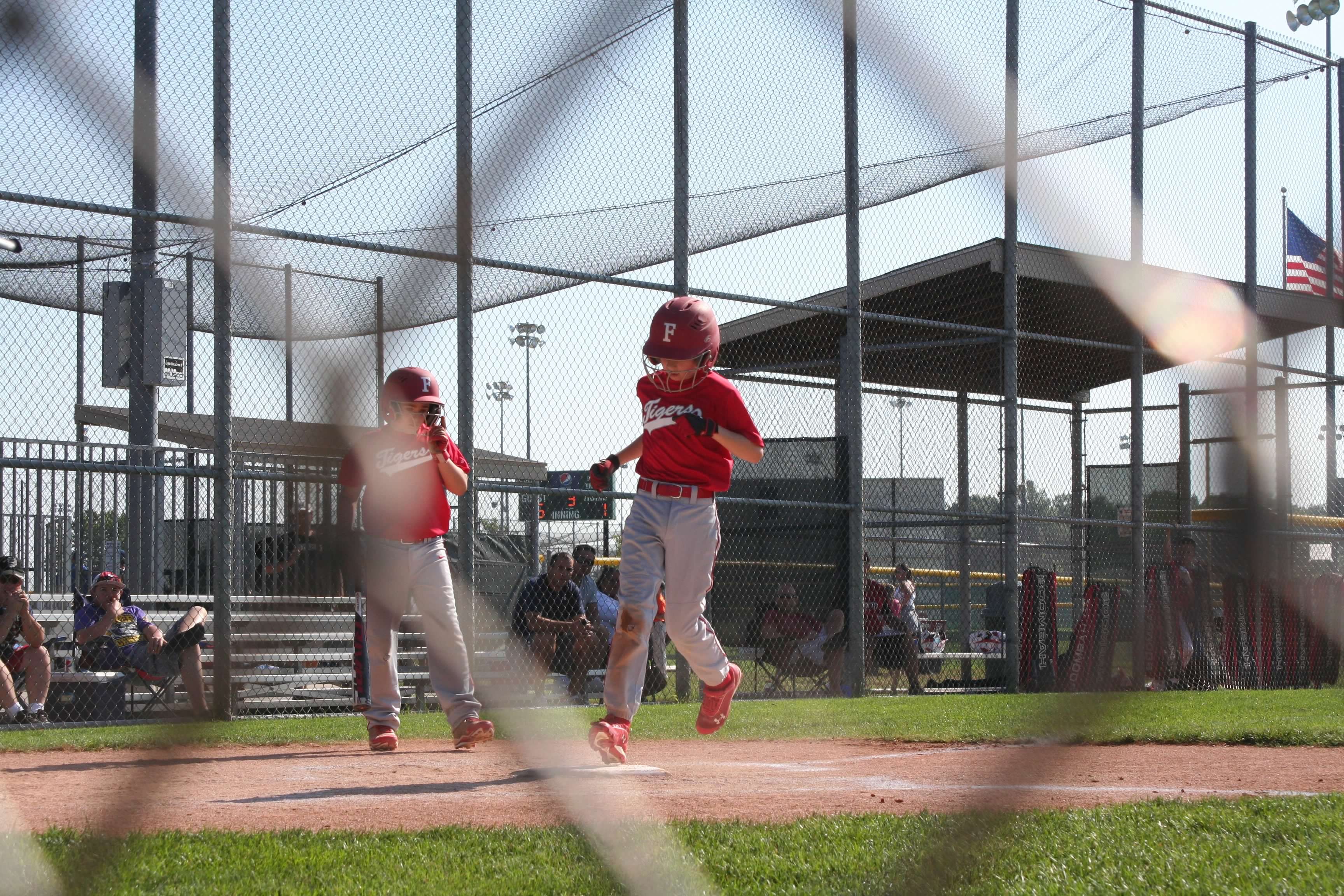
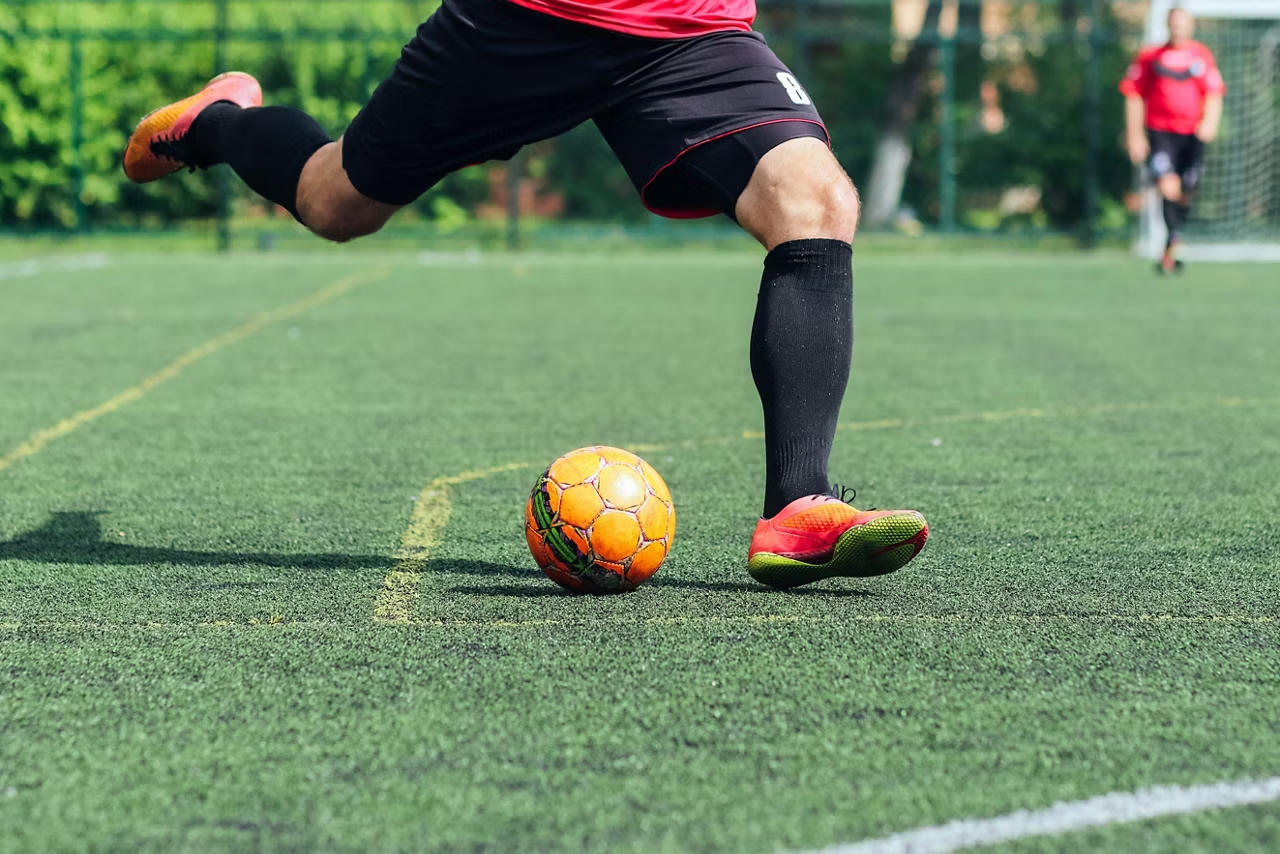
When artificial turf fields became common in my area, the high surface temperatures were impossible to ignore whenever I played on them.
Co-op Experience
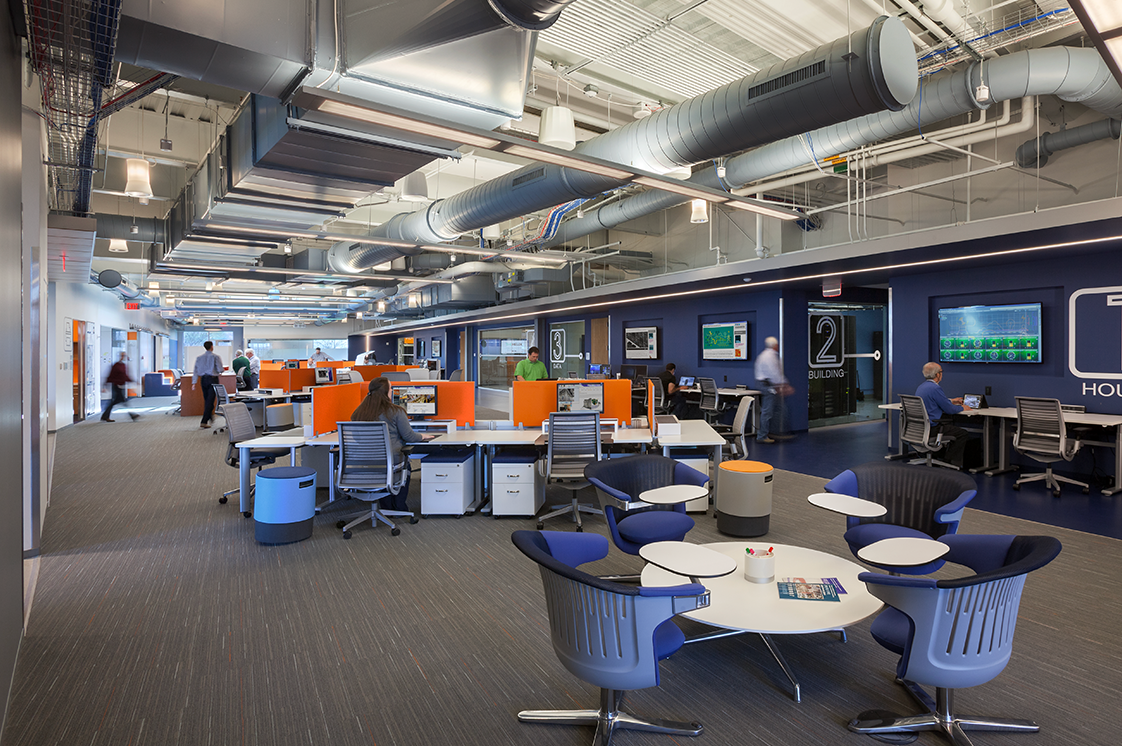
Through my time spent working with cooling technologies at Copeland’s Helix Innovation Center, I was able to begin exploring what a solution to turf’s heat problem could look like.
UNDERSTANDING TURF
Increasing Relevance
Environmental concerns, improved performance, and reduced maintenance have made artificial turf a desirable alternative.
Key Benefits
Turf offers a weatherproof, multi-use surface that is both chemical-free and 5x as durable as natural grass.


HEAT PROBLEM
Benchmarks
85°F: Natural grass
105°F: Cancel sport
115°F: Heat stroke
122°F: Injury & burn after 10m
130°F: 2nd degree burn
140°F: 3rd degree burn after 5s
162°F: Human tissue destroyed
Artificial Turf
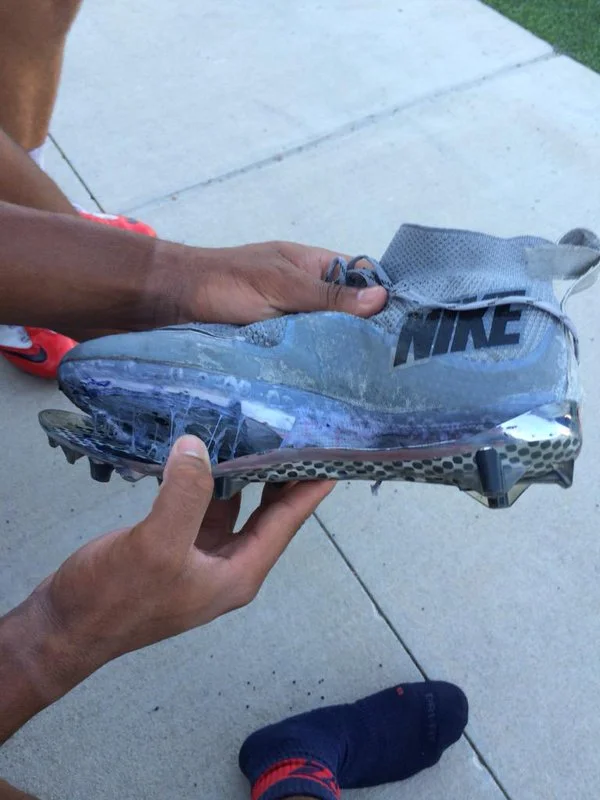
130°F: Average temperature
140-170°F: Maximum temperatures

CURRENT SOLUTIONS
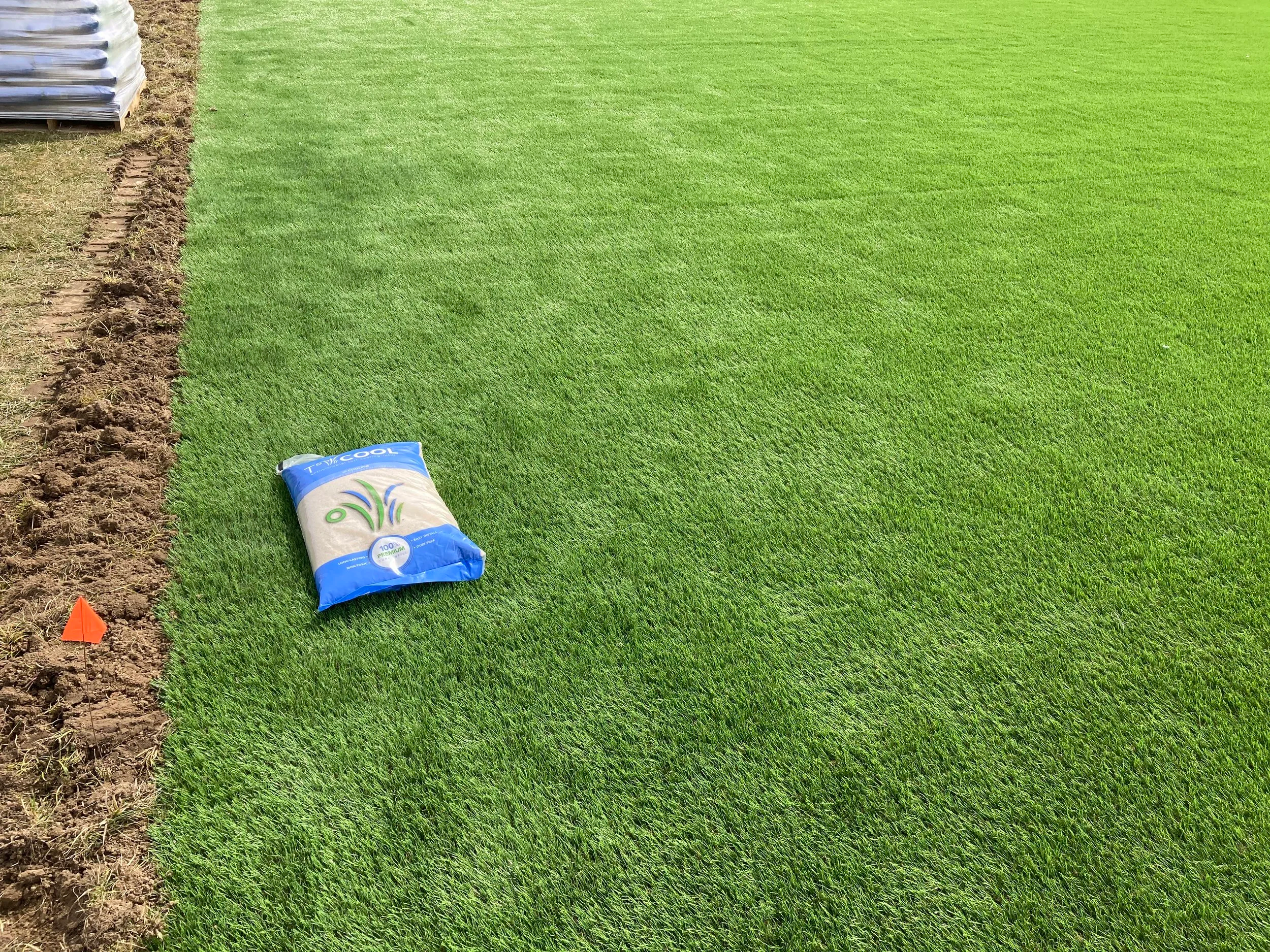
T°Cool Infill
The “Evaporative Cooling Technology” only offers a 30°F reduction, sustaining average surface temperatures of 110-140°F.
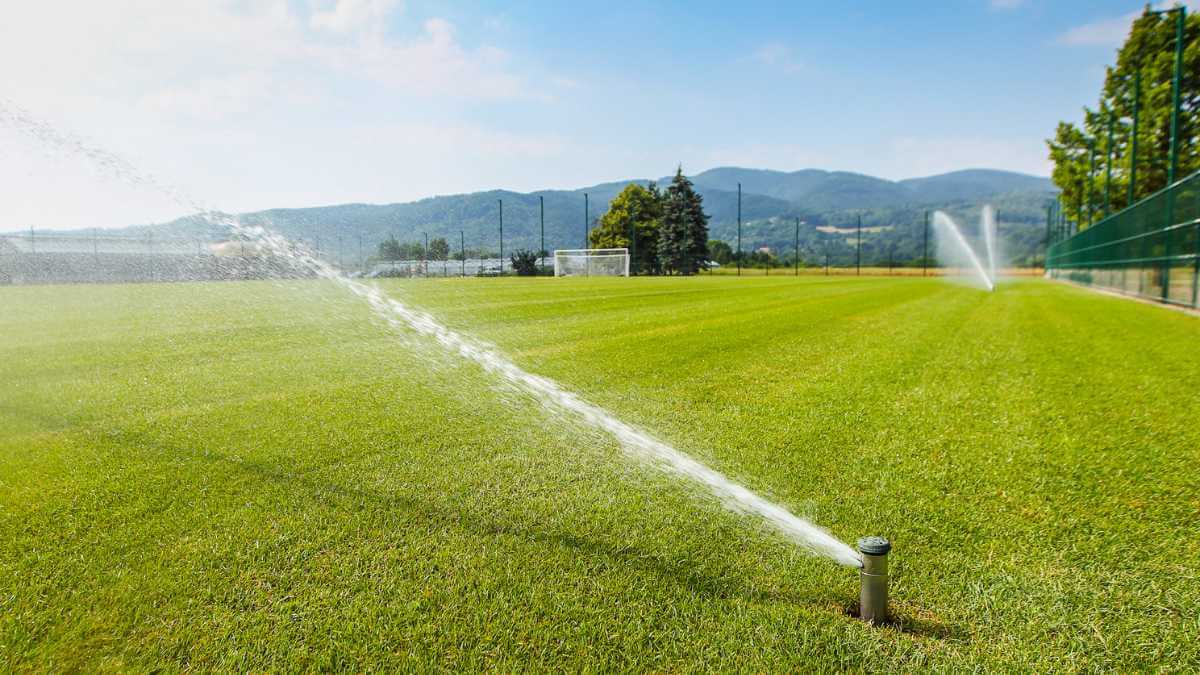
Prior Watering
Heavy watering beforehand is only effective for a short period of time, as temperatures rebound after only 20 minutes.
DESIGN CRITERIA
Safe
Achieve surface temperatures that are consistently safe to use, comparable to natural grass.
Effective
Provide a simple installation and maintenance experience for all involved parties.
Sustainable
Enhance turf’s sustainability by limiting the energy demand of the system.
CONCEPT DEVELOPMENT
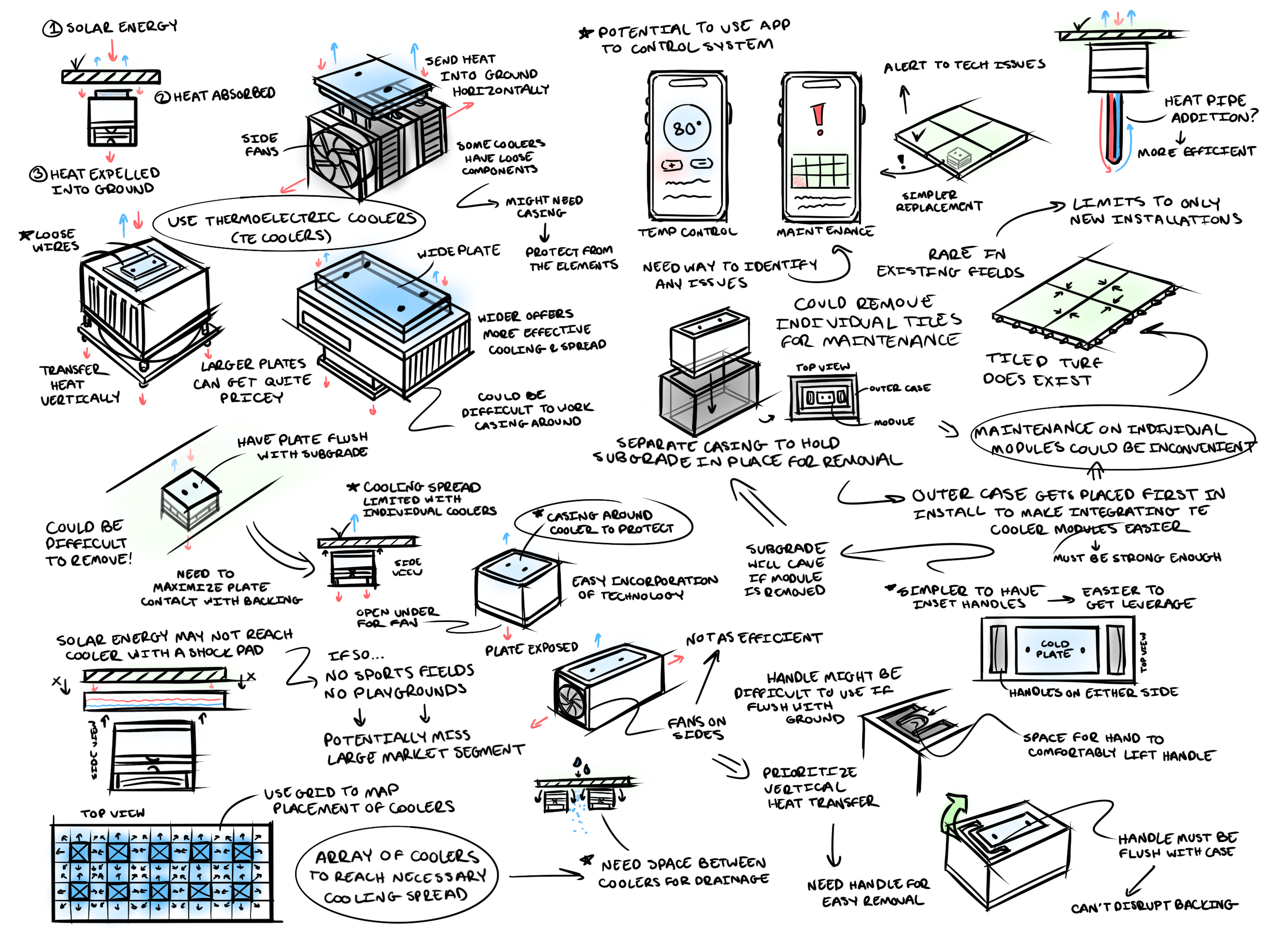
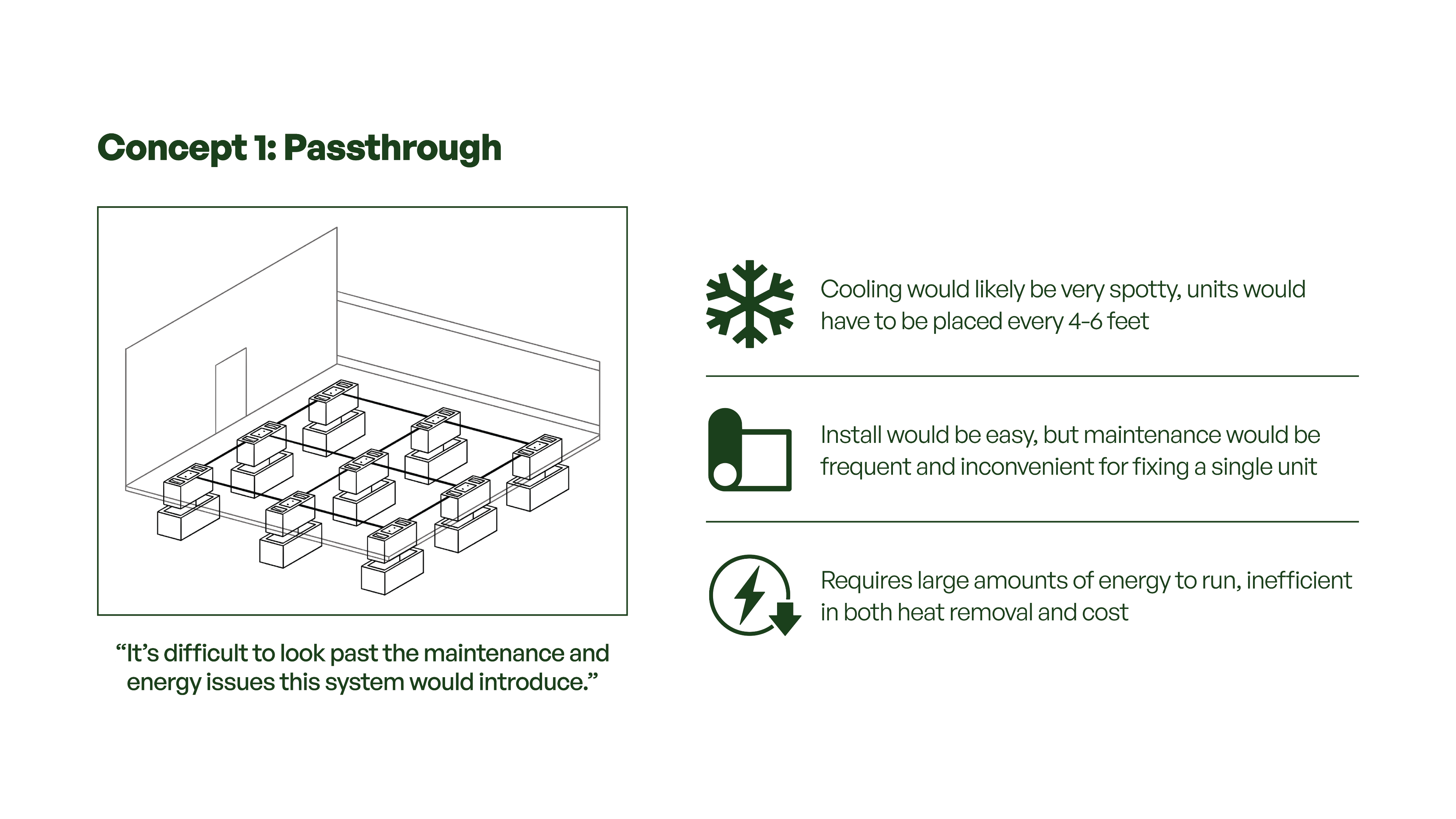
1. Passthrough
Absorb heat and release it to the ground directly below the surface.
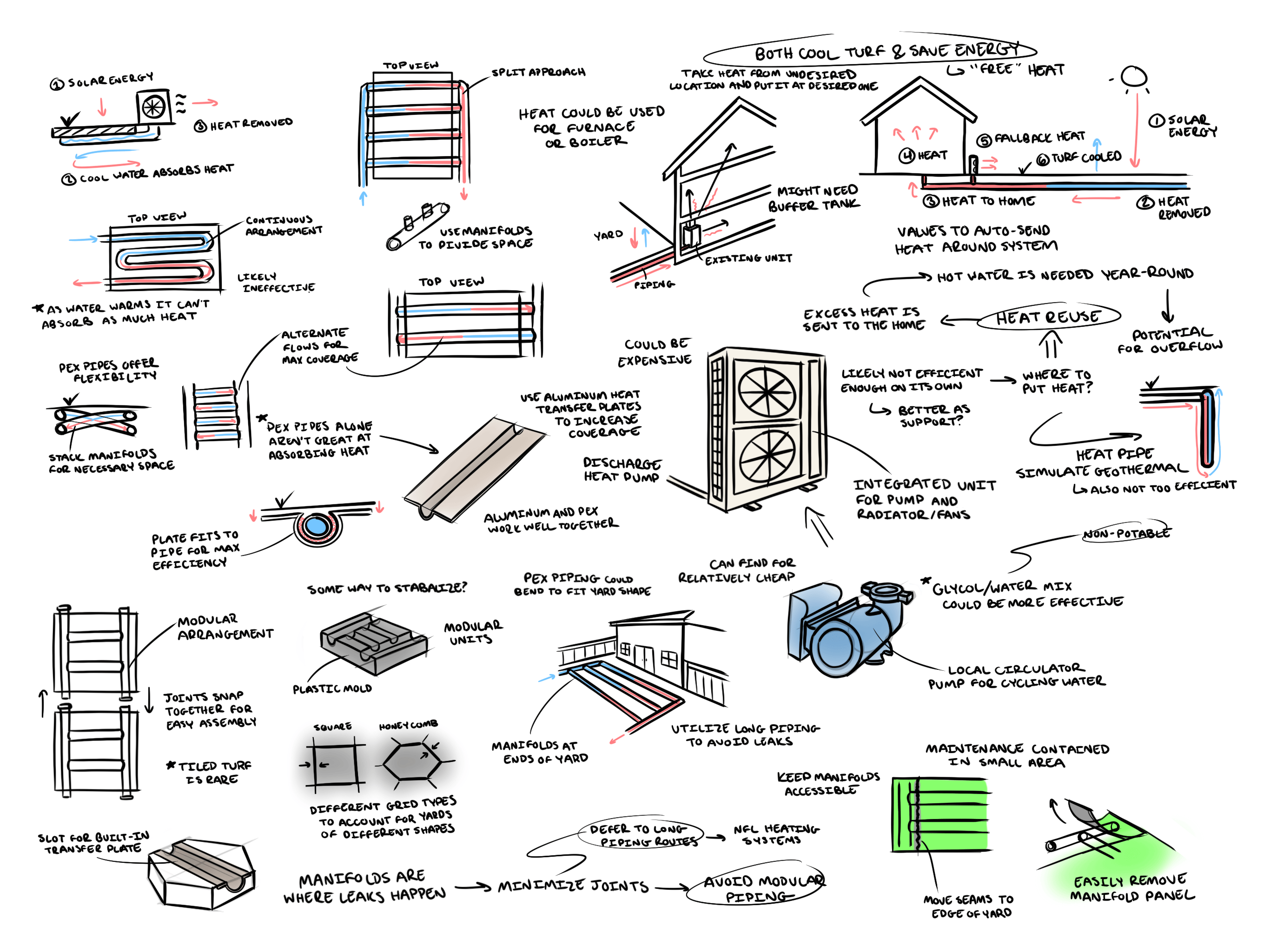
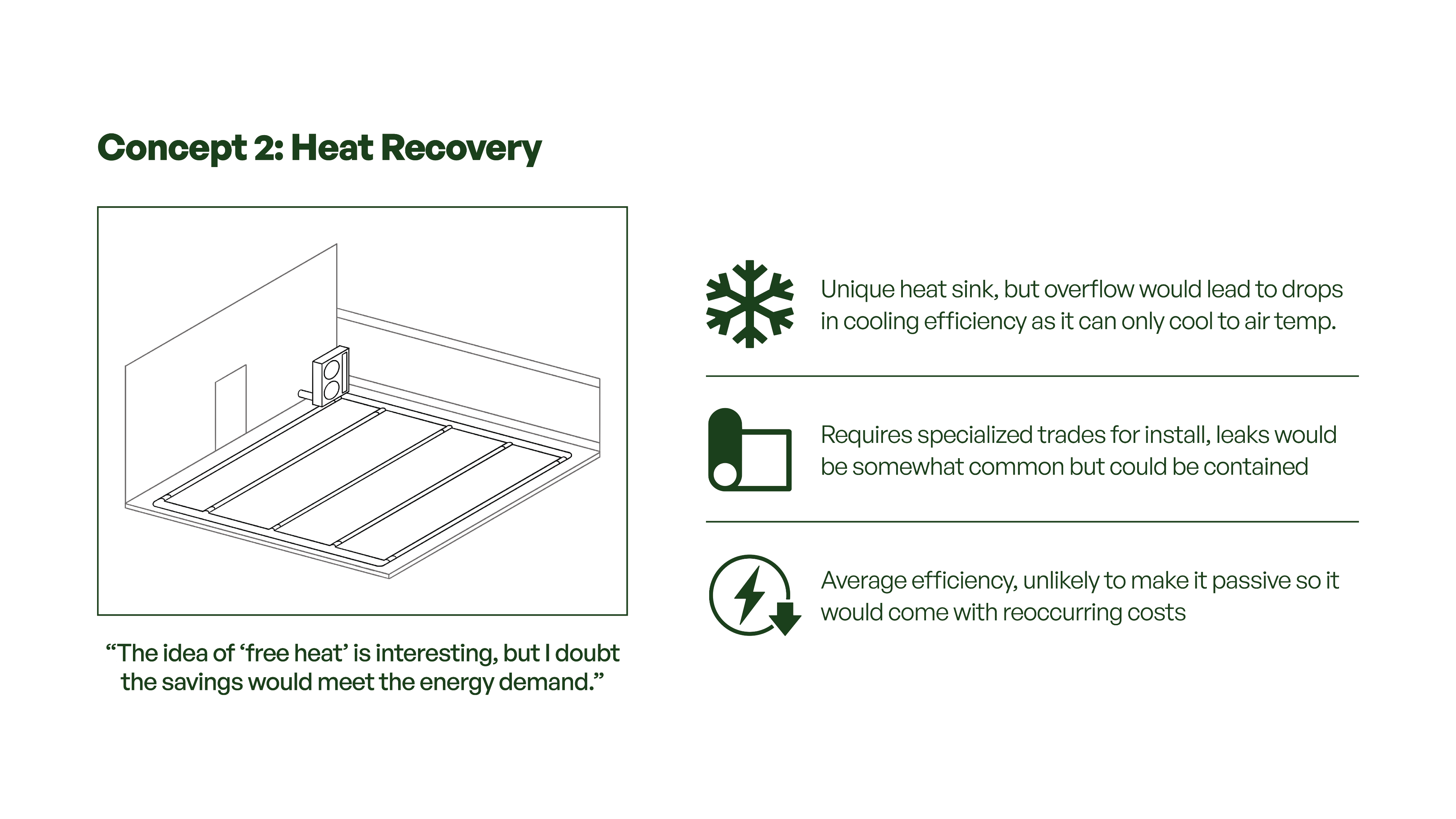
2. Heat Recovery
Collect heat in a way that allows it to be reused on- or off-site.
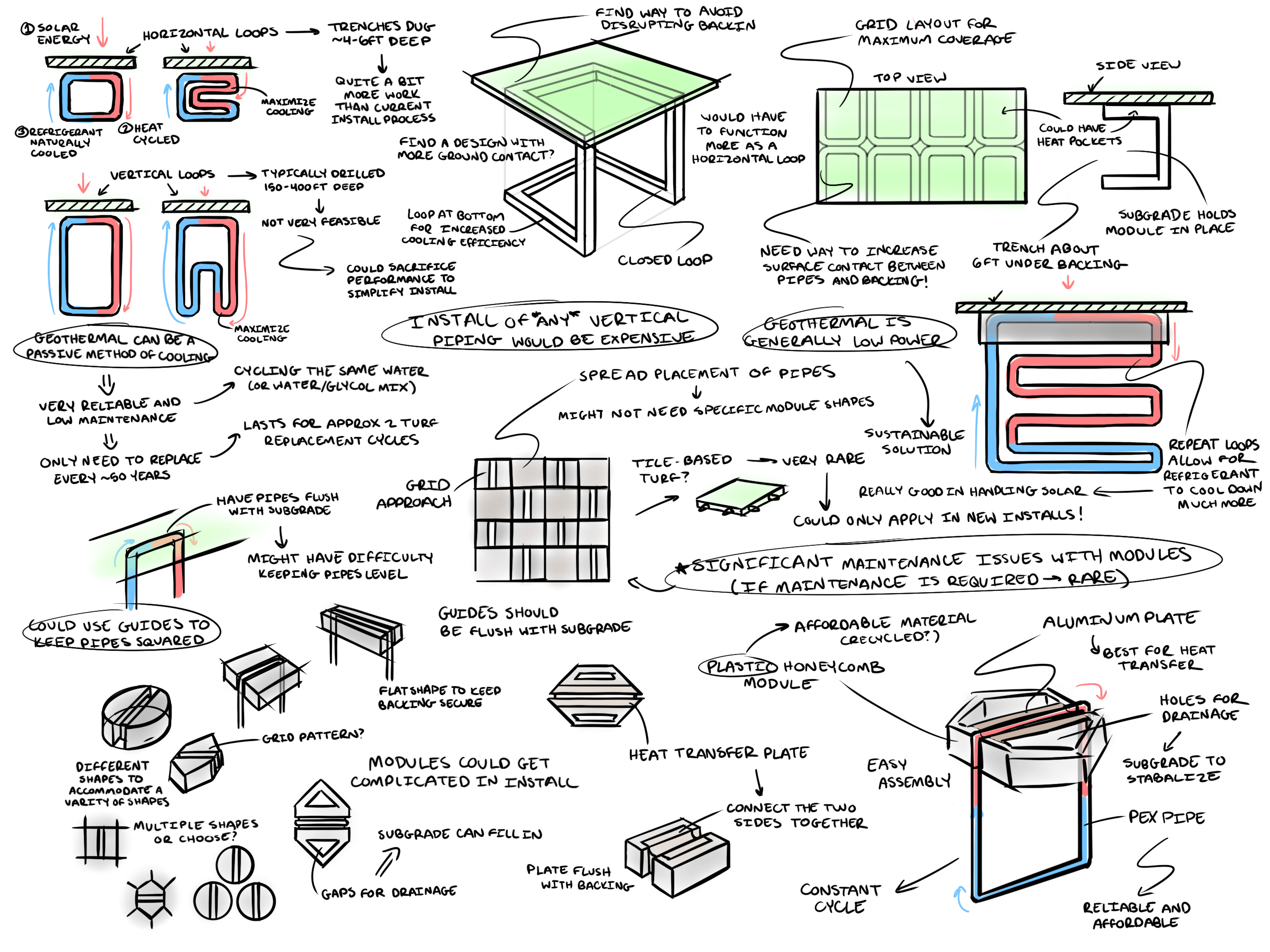
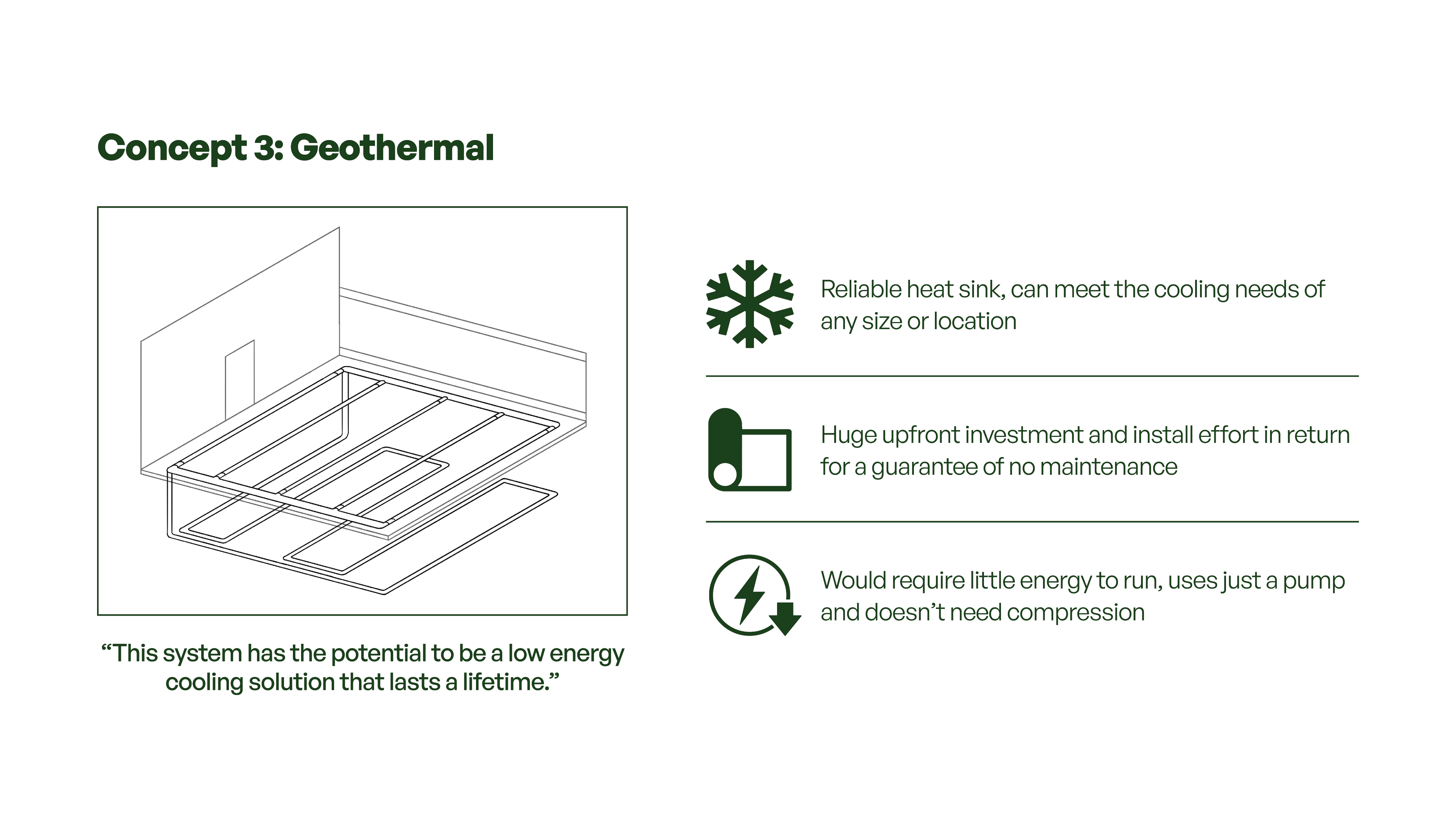
3. Geothermal
Take advantage of the naturally cool ground 4 feet below the surface.
VALIDATION
Interviews
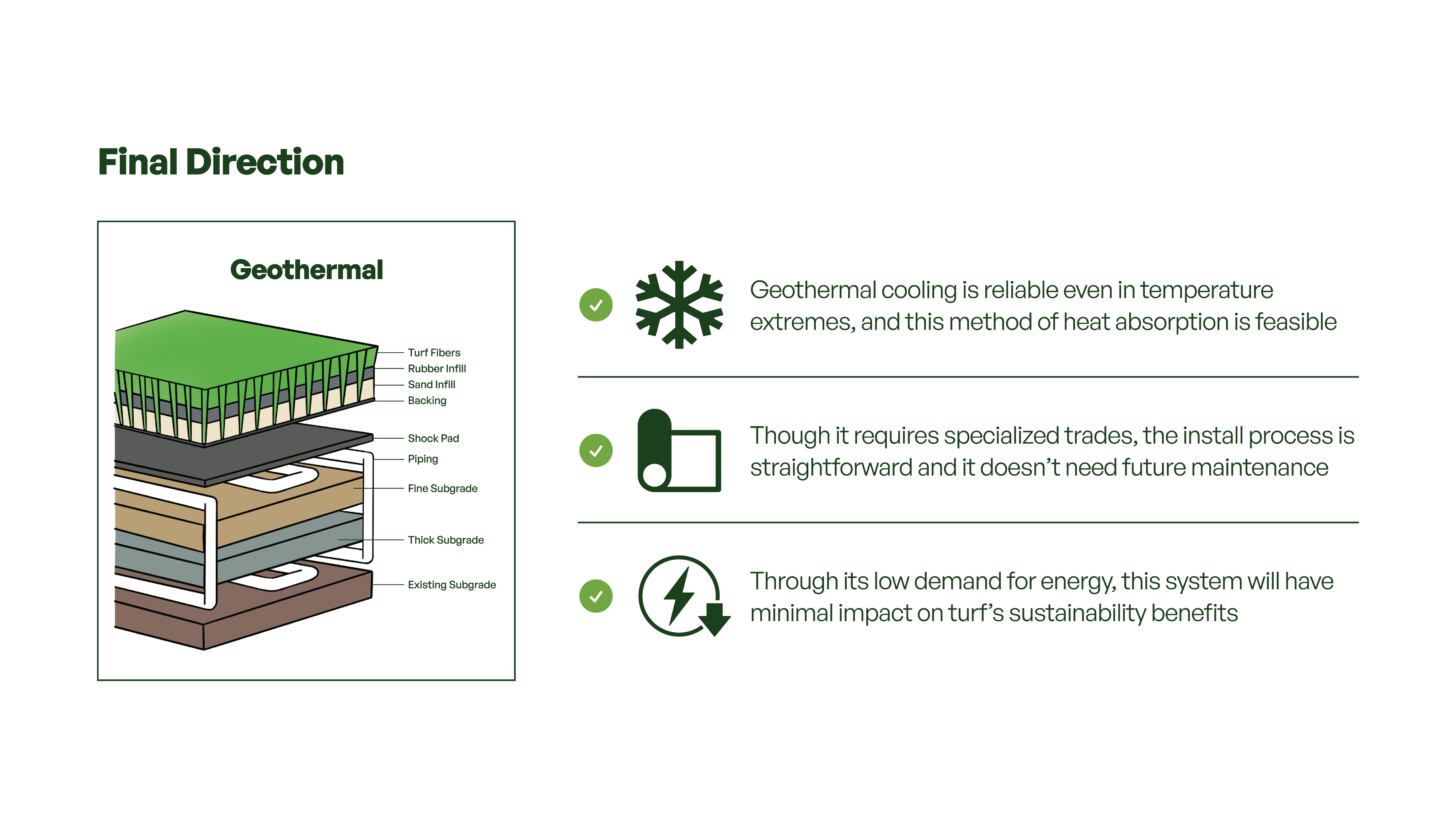
Conducted several meetings with professionals at Copeland’s Innovation Hub to understand likely outcomes. We collectively identified the Geothermal concept as the final direction, as it best meets the design criteria.
User Positioning
Residential applications would vary greatly in demand, shape, and budget. Focusing on the athletics segment provides a consistent need and installation process, as well as a higher availability of resources and infrastructure.
FINAL SYSTEM DESIGN
Seamless Integration
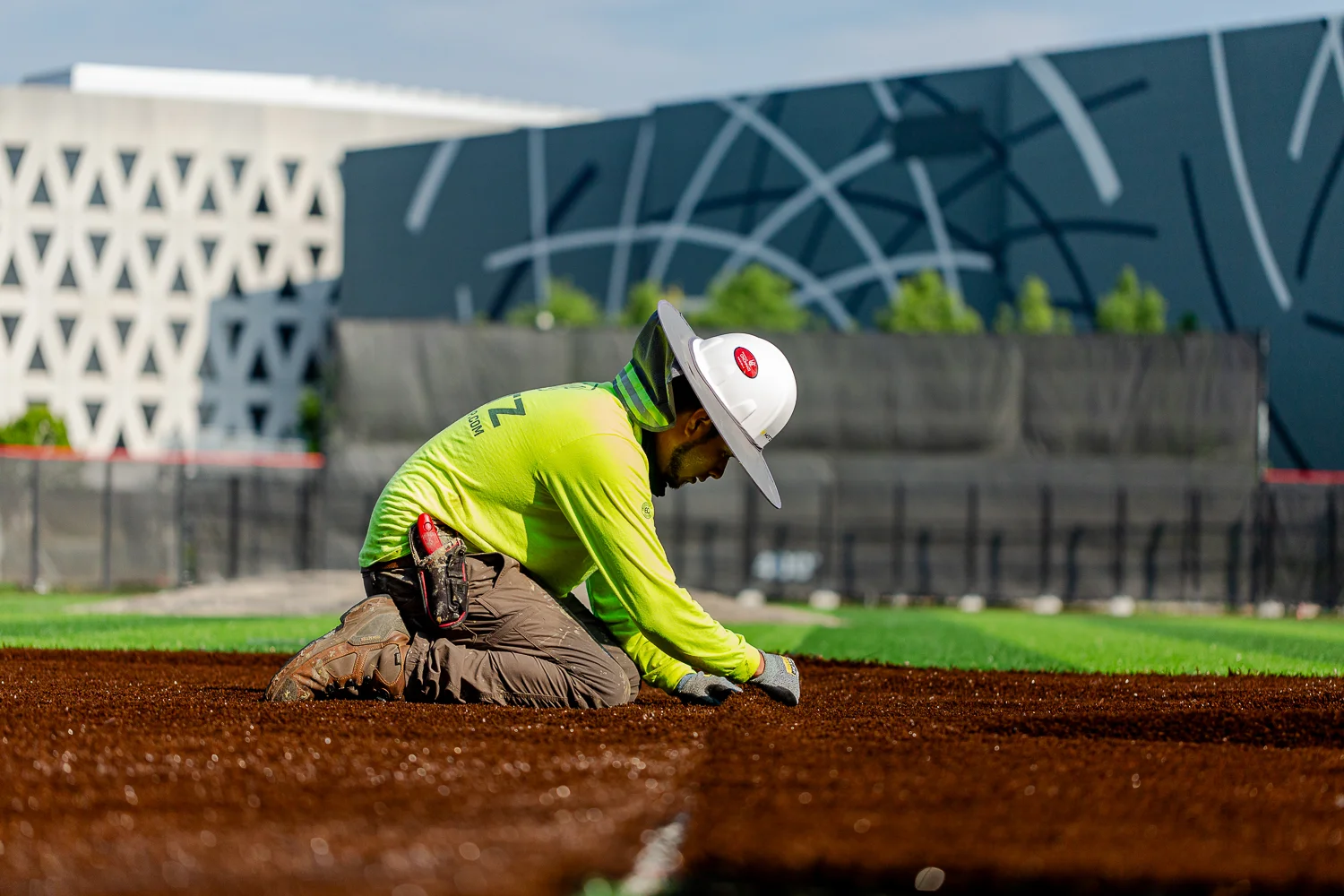
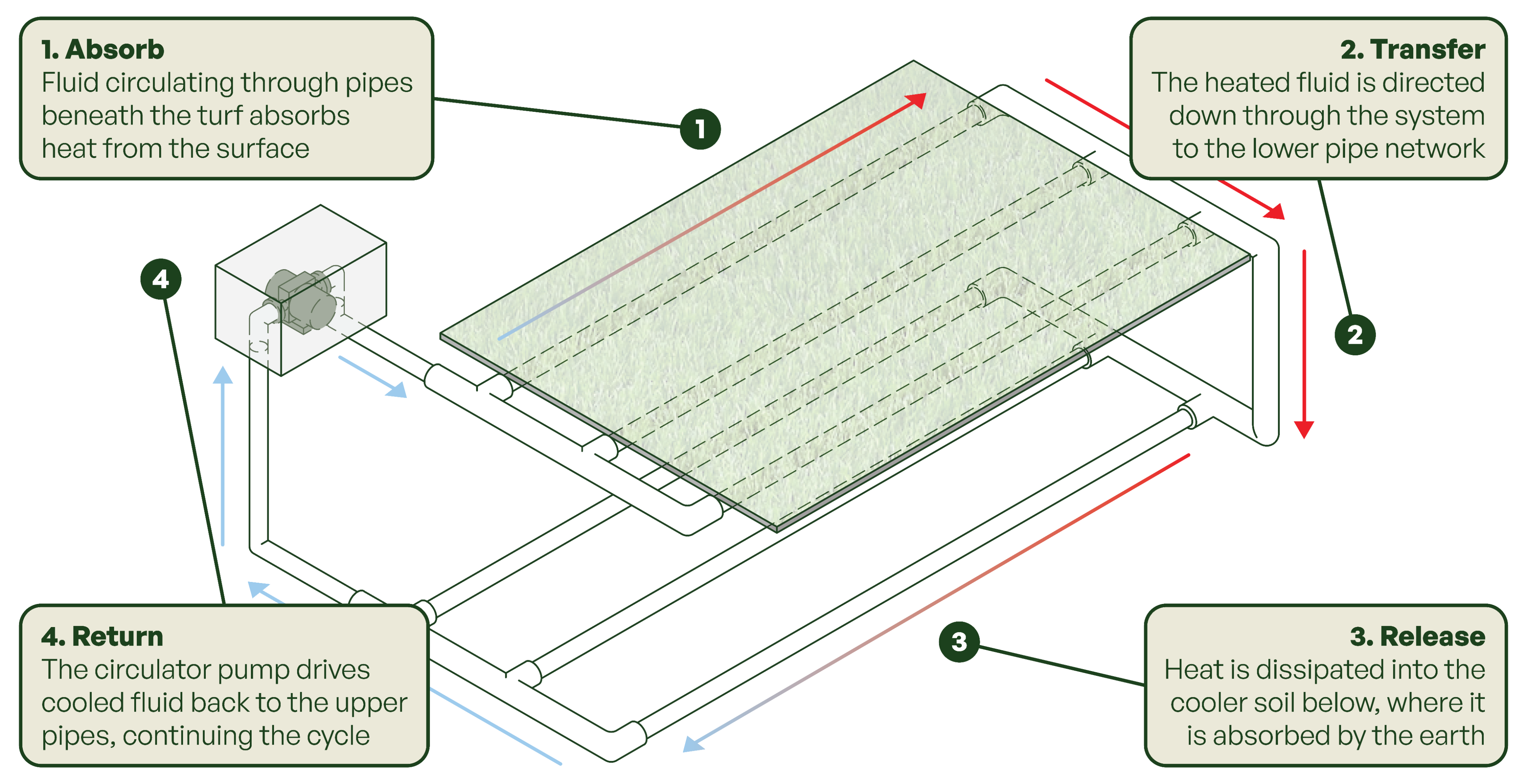
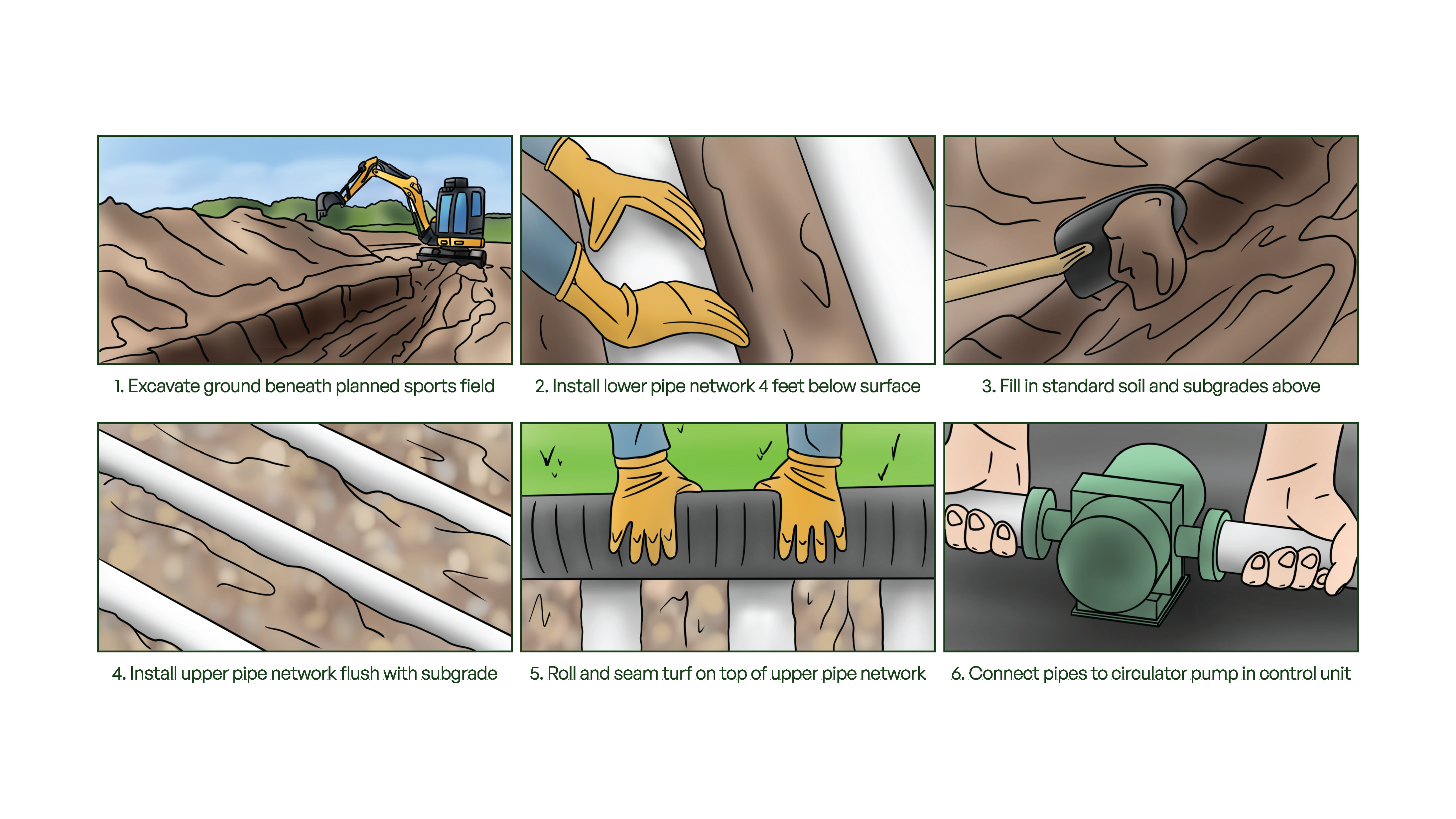
This design adds a cooling network that functions within standard artificial turf construction.
How It Works
A closed-loop piping system is embedded beneath the turf’s backing in the upper subgrade, allowing heat to be absorbed and transferred away without altering the surface experience.
EXPECTATIONS
Cooling Performance
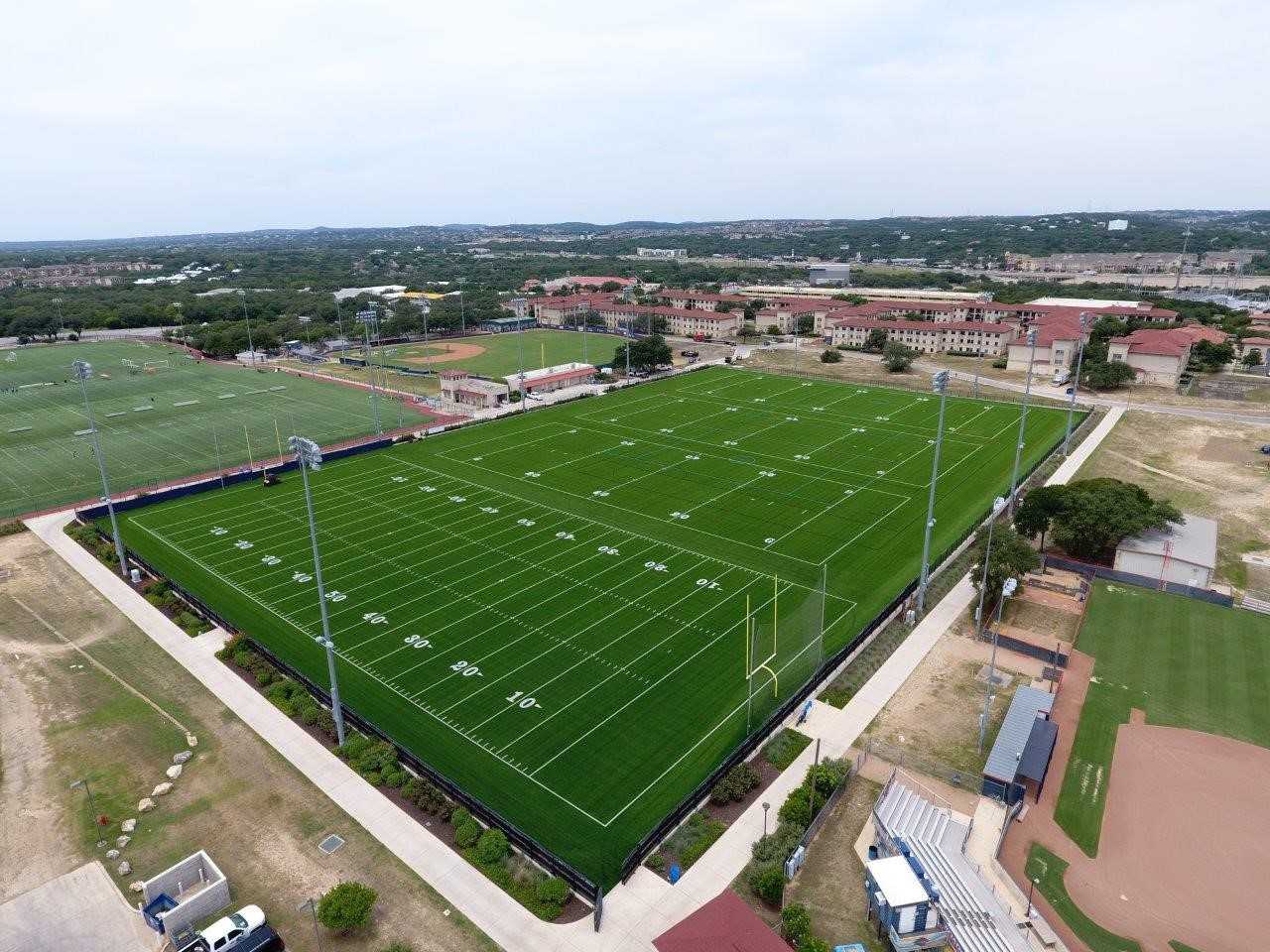
The system reduces surface temperatures by up to 40°F, resulting in consistently safer and more comfortable playing conditions.
BRANDING
Athletic Influence
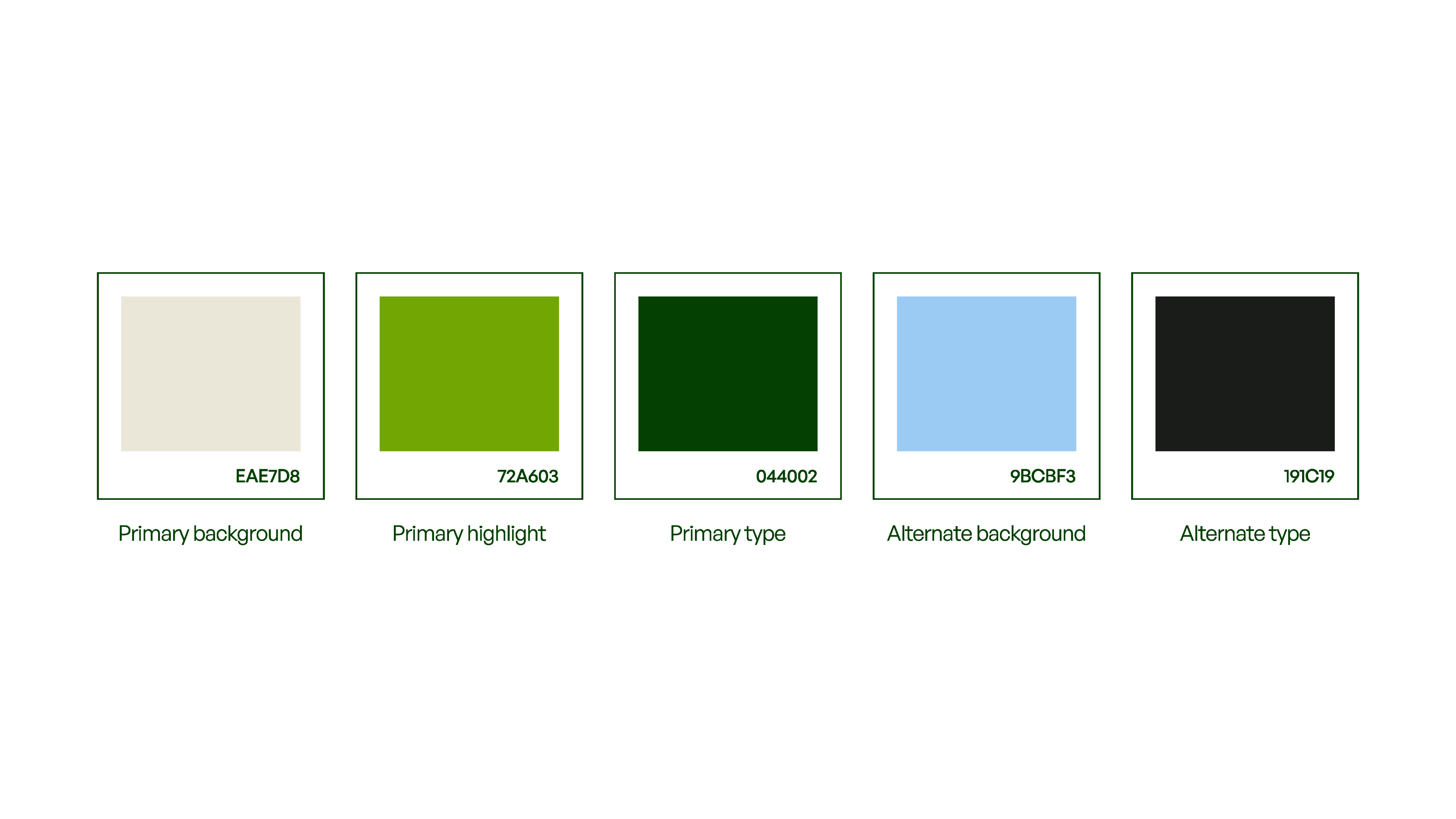
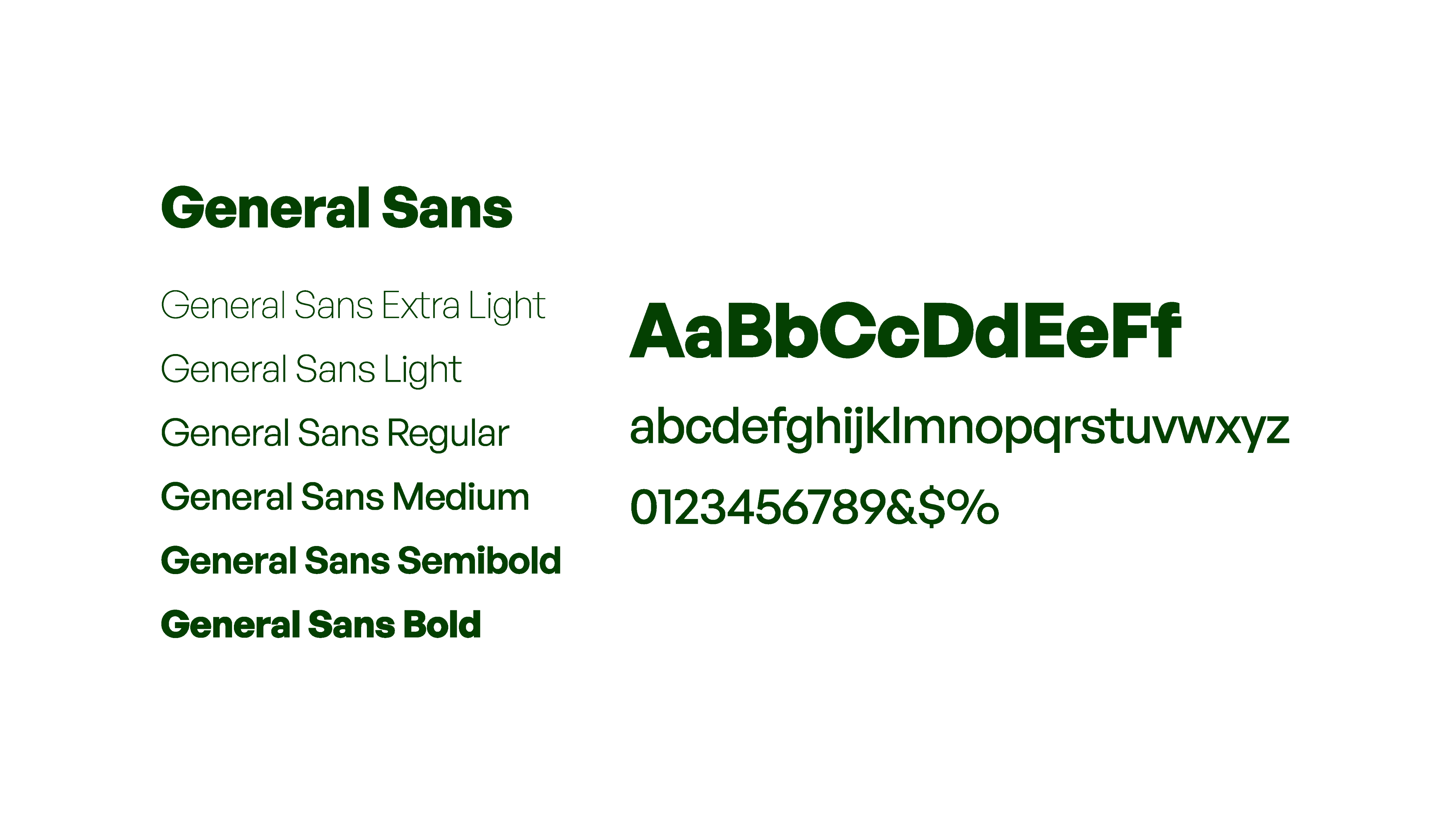
My aim was to implement qualities that nod to vintage athletic typography without being overtly retro, correlating well with the product market.

PROTOTYPE DEVELOPMENT
Visual
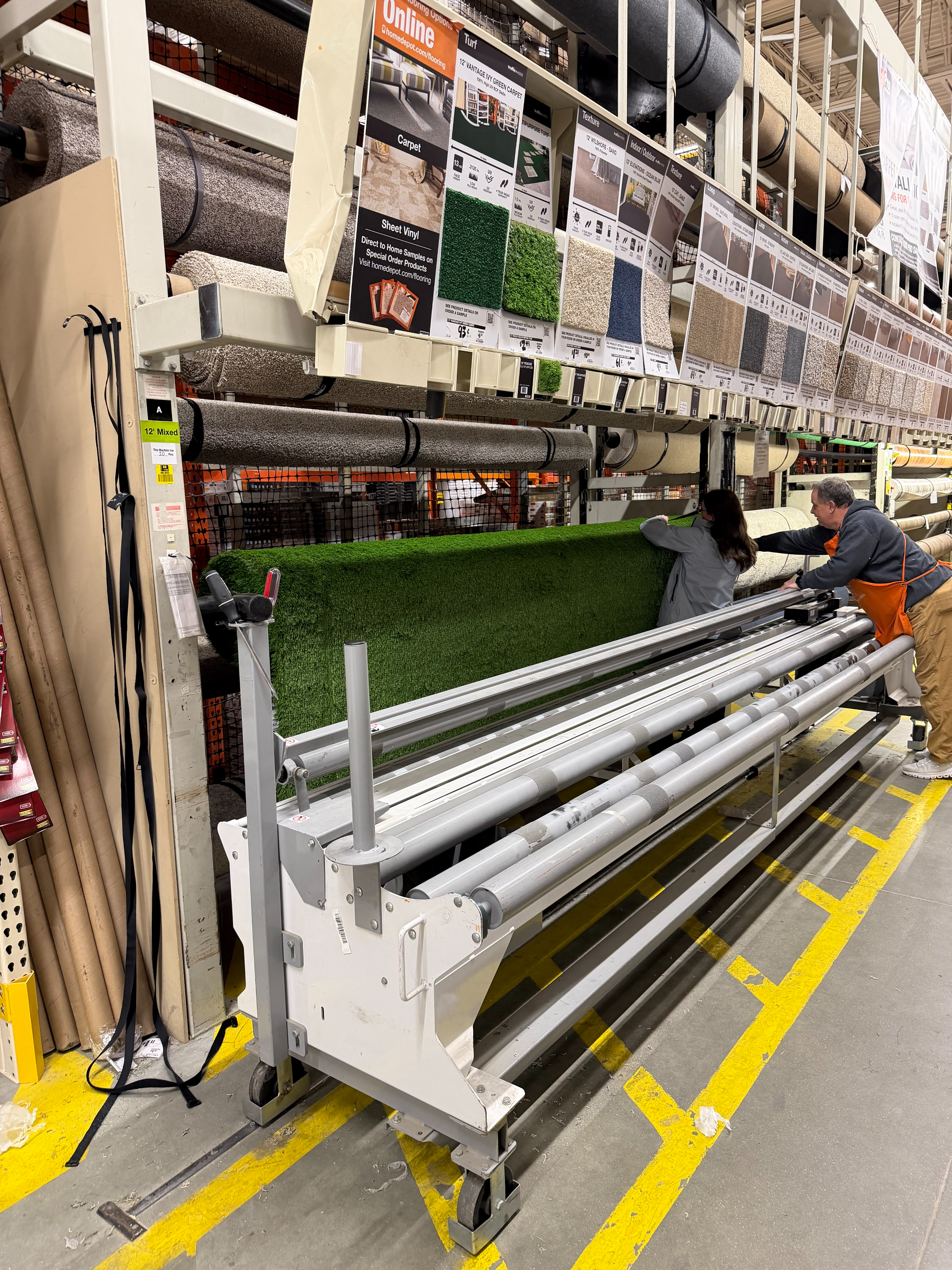
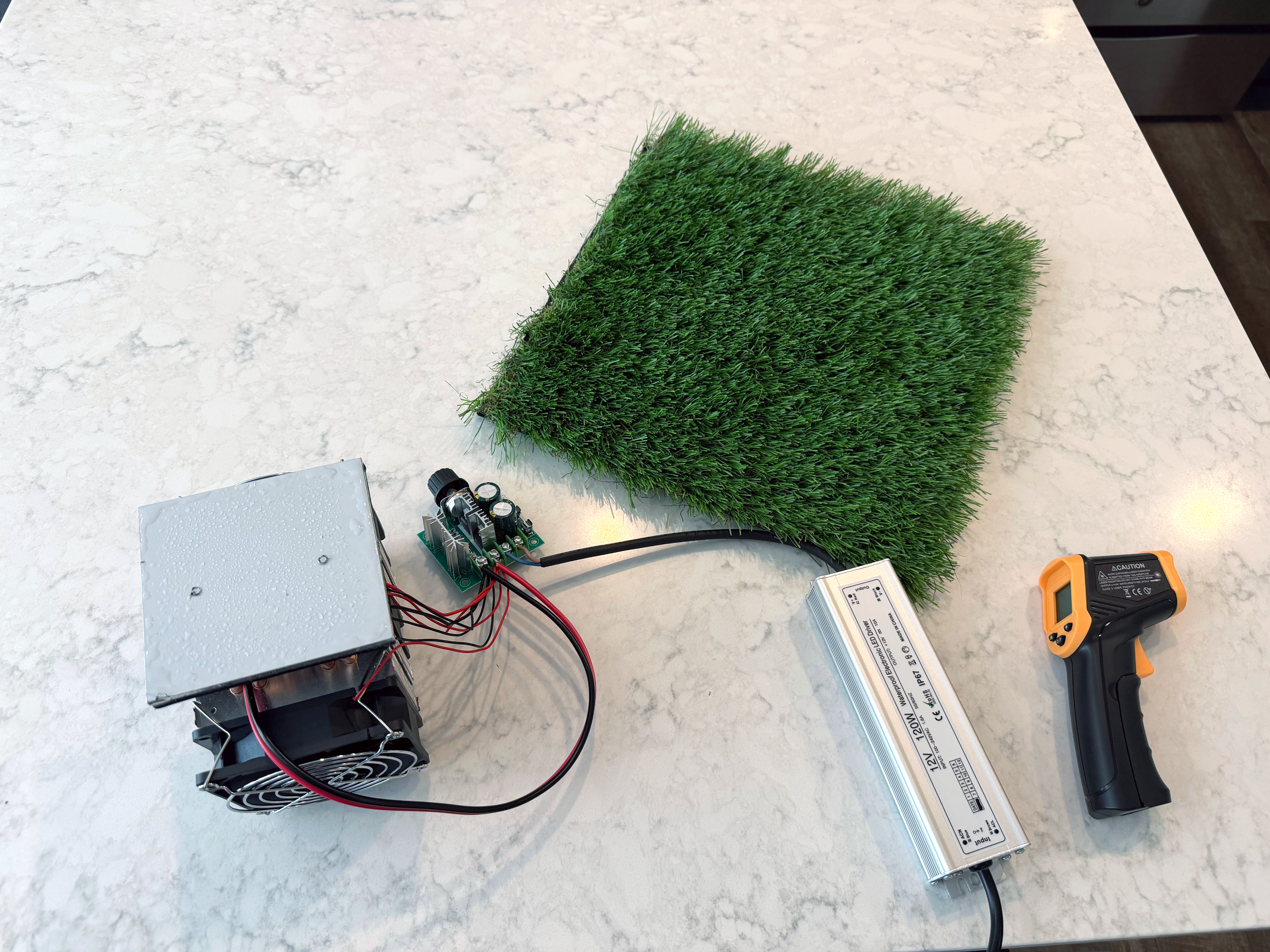
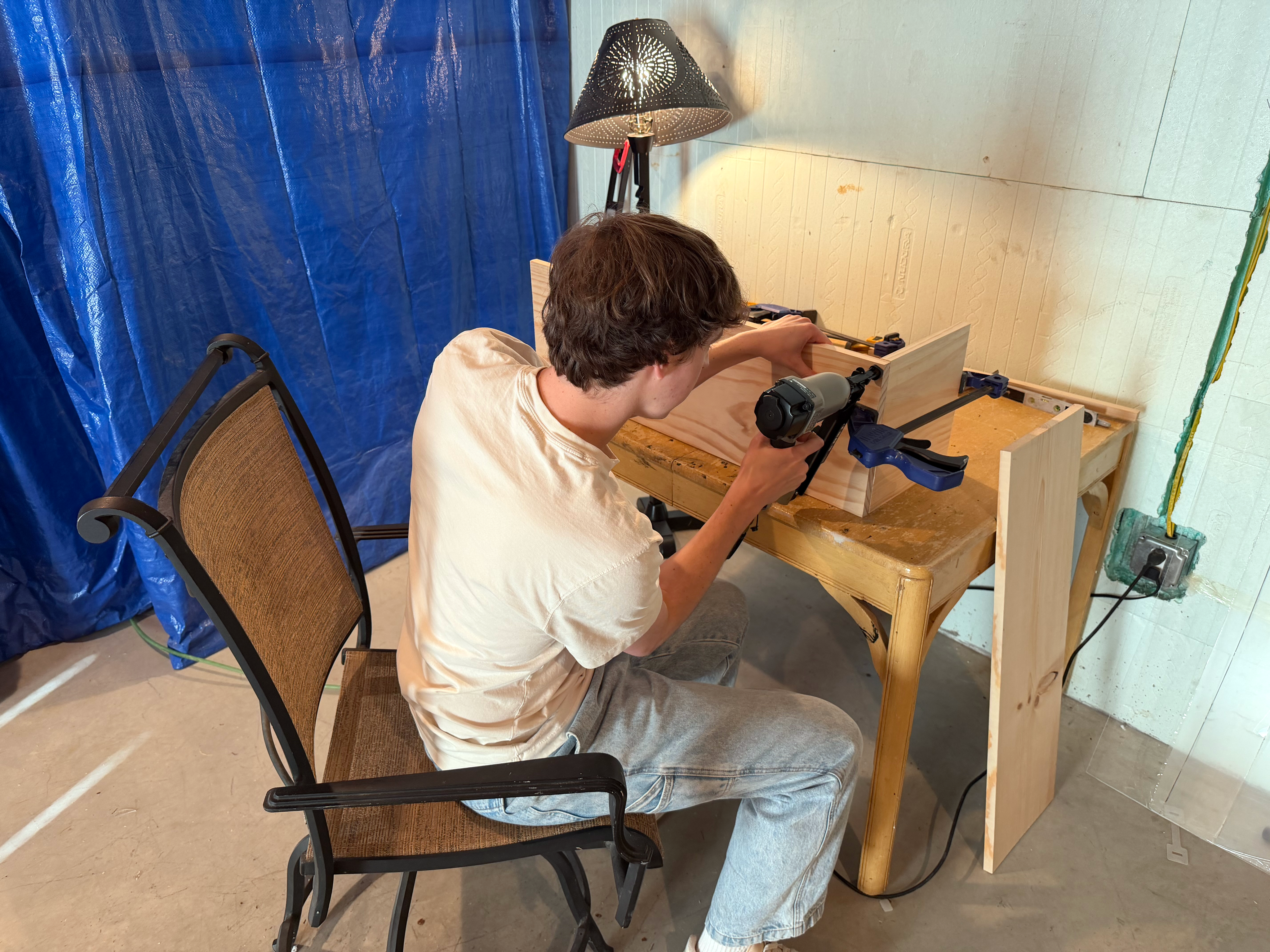
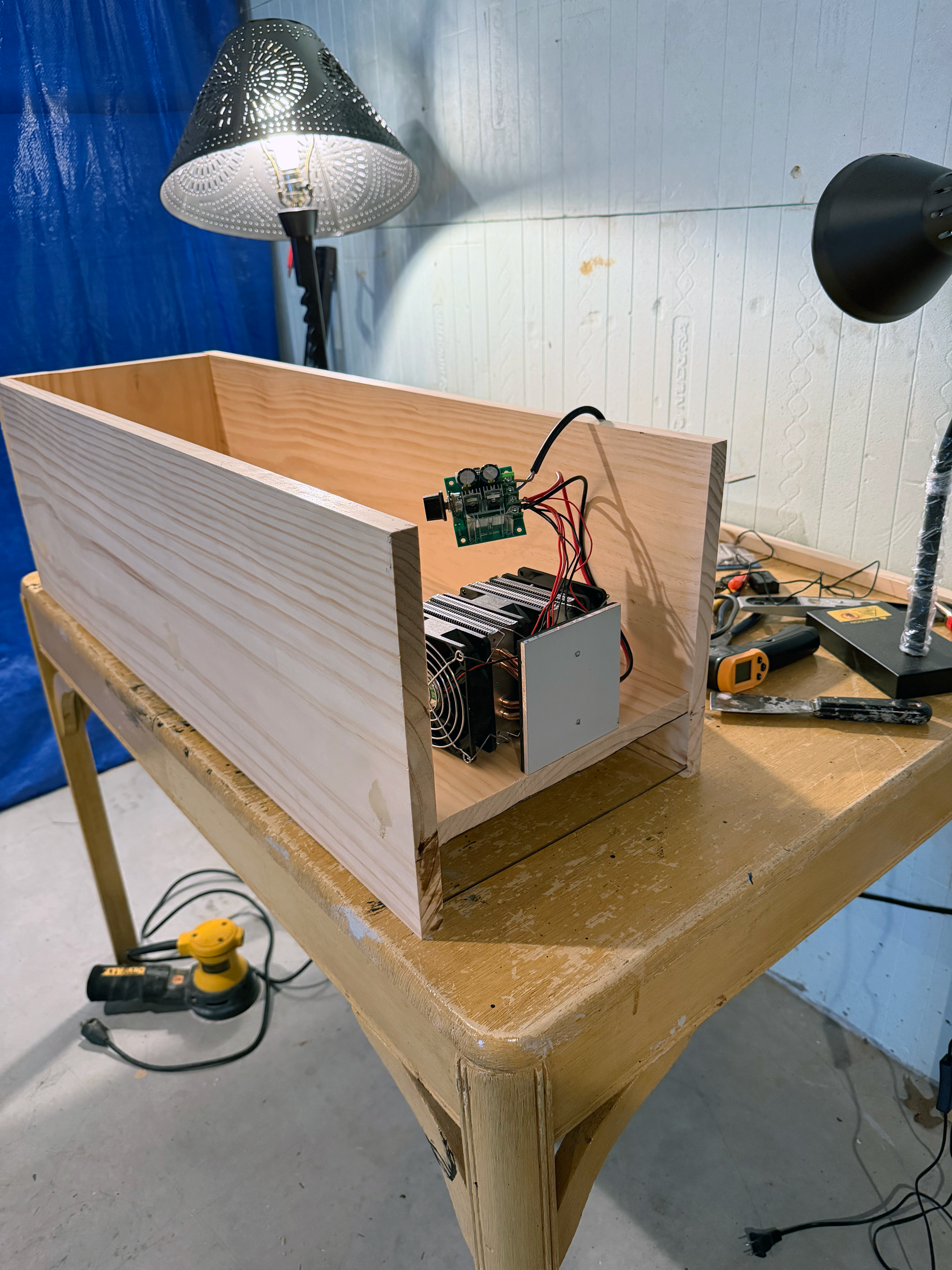
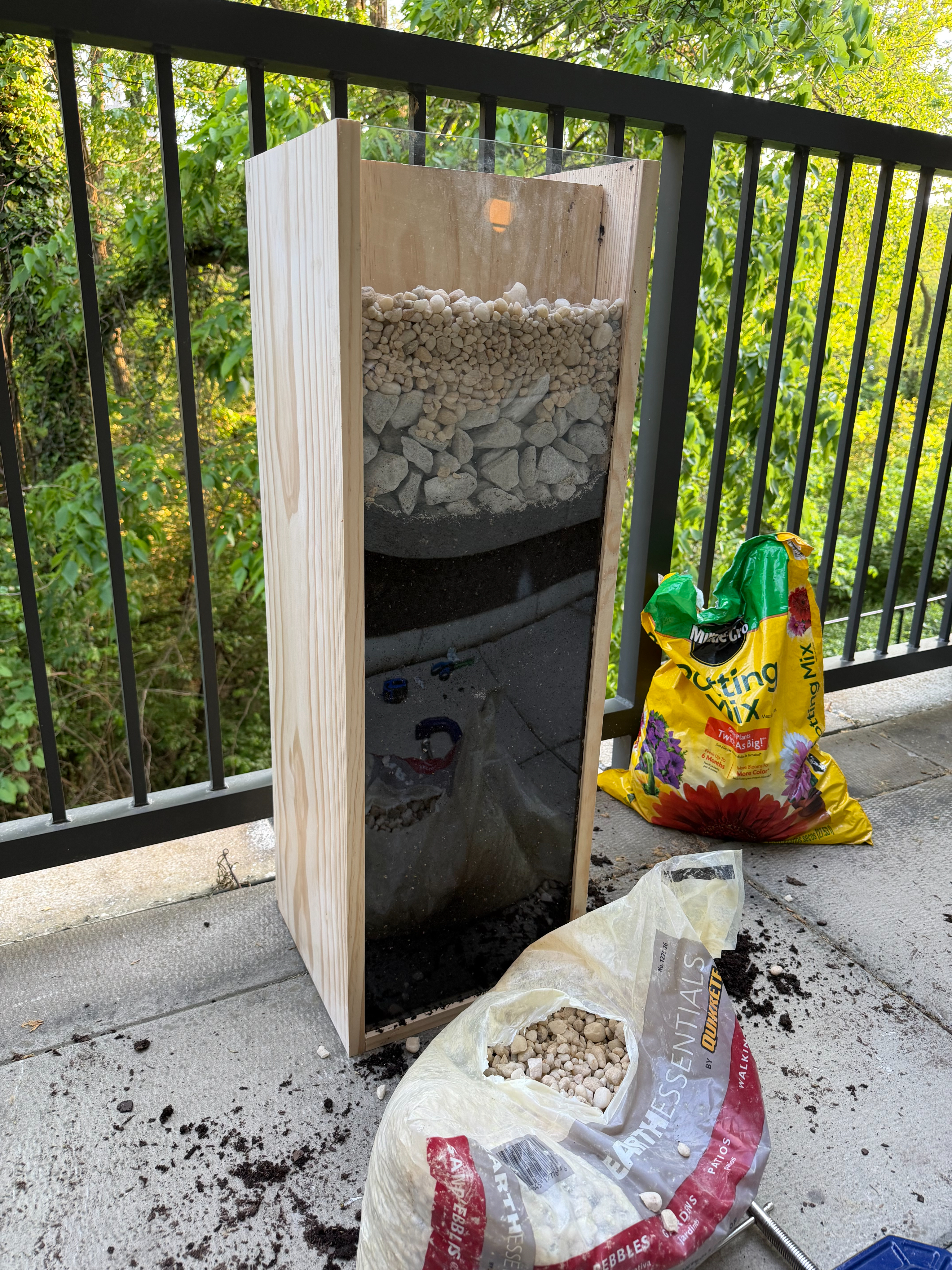
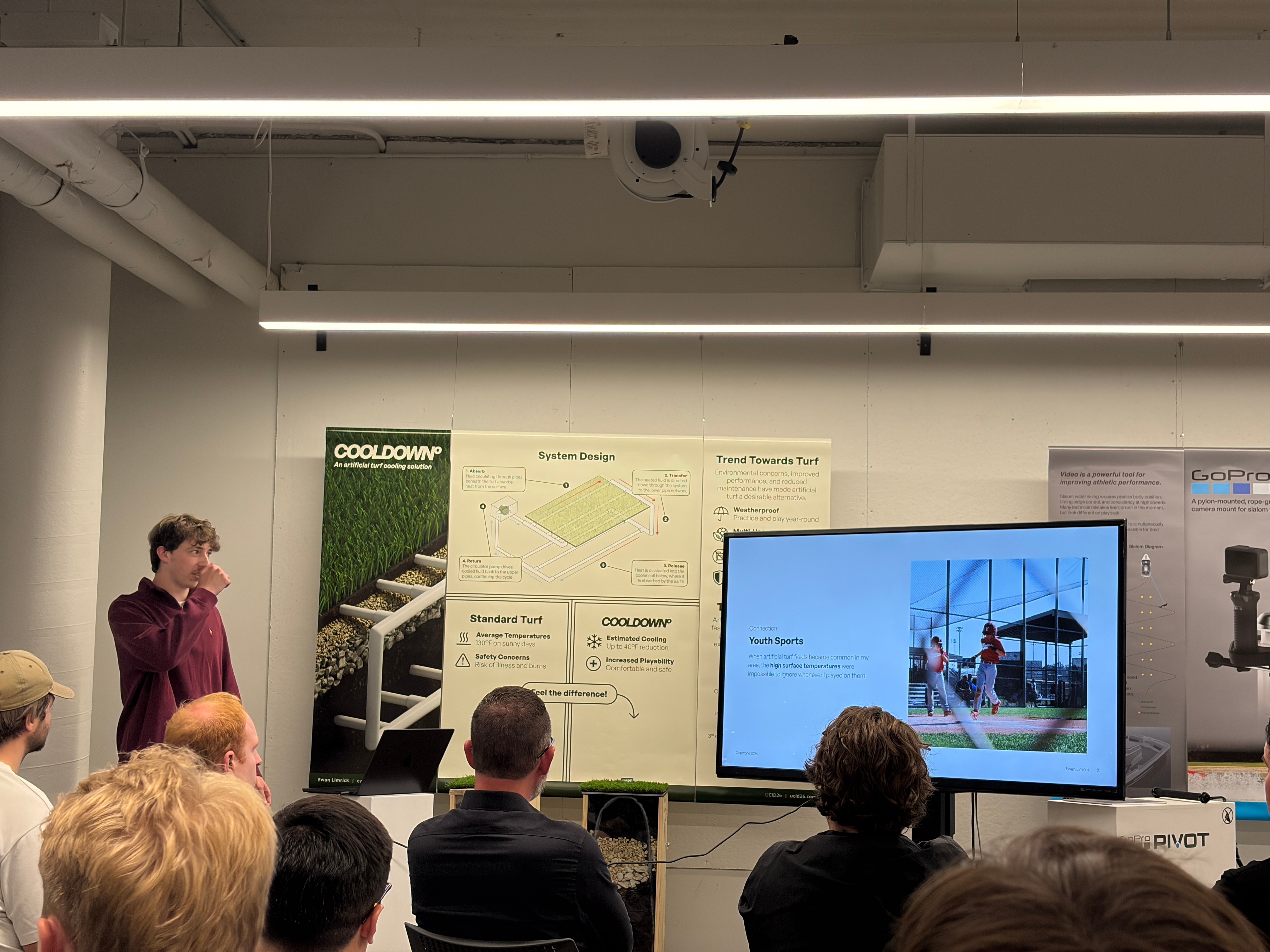
Creating a live cross section of standard turf next to one of this system, which also demonstrates the flow of heat.
Tangible
Allowing viewers to actually feel the expected temperature difference.
DAAPWORKS EVENT
Reflection
This project was uniquely challenging in that it forced me to consider possibilities beyond any work I had done. I learned a valuable lesson in letting the needs of the project guide my thinking, rather than forcing it to fit any notion I had of what it should be.
Acknowledgements
Special thanks to my friends at Copeland for encouraging me to take on this project and making time to offer support. Thank you to my professors and peers for all the feedback and guidance, and to my friends and family for keeping me sane along the way.
View Process Book


Sports facilities lack an effective solution for the high surface-level temperatures of artificial turf during hot days. Cooldown° is a cooling system that reduces surface temperatures, allowing athletes to play comfortably.
Duration
16 weeks
Disciplines
Research
System Design
Prototype
CONTEXT
Youth Sports
When artificial turf fields became common in my area, the high surface temperatures were impossible to ignore whenever I played on them.
Co-op Experience
Through my time spent working with cooling technologies at Copeland’s Helix Innovation Center, I was able to begin exploring what a solution to turf’s heat problem could look like.
UNDERSTANDING TURF
Increasing Relevance
Environmental concerns, improved performance, and reduced maintenance have made artificial turf a desirable alternative.
Key Benefits
Turf offers a weatherproof, multi-use surface that is both chemical-free and 5x as durable as natural grass.
HEAT PROBLEM
Benchmarks
85°F: Natural grass
105°F: Cancel sport
115°F: Heat stroke
122°F: Injury & burn after 10m
130°F: 2nd degree burn
140°F: 3rd degree burn after 5s
162°F: Human tissue destroyed
Artificial Turf
130°F: Average temperature
140-170°F: Maximum temperatures
CURRENT SOLUTIONS
T°Cool Infill
The “Evaporative Cooling Technology” only offers a 30°F reduction, sustaining average surface temperatures of 110-140°F.
Prior Watering
Heavy watering beforehand is only effective for a short period of time, as temperatures rebound after only 20 minutes.
DESIGN CRITERIA
Safe
Achieve surface temperatures that are consistently safe to use, comparable to natural grass.
Effective
Provide a simple installation and maintenance experience for all involved parties.
Sustainable
Enhance turf’s sustainability by limiting the energy demand of the system.
CONCEPT DEVELOPMENT
1. Passthrough
Absorb heat and release it to the ground directly below the surface.
2. Heat Recovery
Collect heat in a way that allows it to be reused on- or off-site.
3. Geothermal
Take advantage of the naturally cool ground 4 feet below the surface.
VALIDATION
Interviews
Conducted several meetings with professionals at Copeland’s Innovation Hub to understand likely outcomes. We collectively identified the Geothermal concept as the final direction, as it best meets the design criteria.
User Positioning
Residential applications would vary greatly in demand, shape, and budget. Focusing on the athletics segment provides a consistent need and installation process, as well as a higher availability of resources and infrastructure.
FINAL SYSTEM DESIGN
Seamless Integration
This design adds a cooling network that functions within standard artificial turf construction.
How It Works
A closed-loop piping system is embedded beneath the turf’s backing in the upper subgrade, allowing heat to be absorbed and transferred away without altering the surface experience.
EXPECTATIONS
Cooling Performance
The system reduces surface temperatures by up to 40°F, resulting in consistently safer and more comfortable playing conditions.
BRANDING
Athletic Influence
My aim was to implement qualities that nod to vintage athletic typography without being overtly retro, correlating well with the product market.
PROTOTYPE DEVELOPMENT
Visual
Creating a live cross section of standard turf next to one of this system, which also demonstrates the flow of heat.
Tangible
Allowing viewers to actually feel the expected temperature difference.
DAAPWORKS EVENT
Reflection
This project was uniquely challenging in that it forced me to consider possibilities beyond any work I had done. I learned a valuable lesson in letting the needs of the project guide my thinking, rather than forcing it to fit any notion I had of what it should be.
Acknowledgements
Special thanks to my friends at Copeland for encouraging me to take on this project and making time to offer support. Thank you to my professors and peers for all the feedback and guidance, and to my friends and family for keeping me sane along the way.
View Process Book


Ewan Limrick
Designing original solutions grounded in user insight.


317.273.9373
ewanlimrick@outlook.com
Sports facilities lack an effective solution for the high surface-level temperatures of artificial turf during hot days. Cooldown° is a cooling system that reduces surface temperatures, allowing athletes to play comfortably.
Duration
16 weeks
Disciplines
Research
System Design
Prototype
CONTEXT
Youth Sports
When artificial turf fields became common in my area, the high surface temperatures were impossible to ignore whenever I played on them.
Co-op Experience
Through my time spent working with cooling technologies at Copeland’s Helix Innovation Center, I was able to begin exploring what a solution to turf’s heat problem could look like.
UNDERSTANDING TURF
Increasing Relevance
Environmental concerns, improved performance, and reduced maintenance have made artificial turf a desirable alternative.
Key Benefits
Turf offers a weatherproof, multi-use surface that is both chemical-free and 5x as durable as natural grass.
HEAT PROBLEM
Benchmarks
85°F: Natural grass
105°F: Cancel sport
115°F: Heat stroke
122°F: Injury & burn after 10m
130°F: 2nd degree burn
140°F: 3rd degree burn after 5s
162°F: Human tissue destroyed
Artificial Turf
130°F: Average temperature
140-170°F: Maximum temperatures
CURRENT SOLUTIONS
T°Cool Infill
The “Evaporative Cooling Technology” only offers a 30°F reduction, sustaining average surface temperatures of 110-140°F.
Prior Watering
Heavy watering beforehand is only effective for a short period of time, as temperatures rebound after only 20 minutes.
DESIGN CRITERIA
Safe
Achieve surface temperatures that are consistently safe to use, comparable to natural grass.
Effective
Provide a simple installation and maintenance experience for all involved parties.
Sustainable
Enhance turf’s sustainability by limiting the energy demand of the system.
CONCEPT DEVELOPMENT
1. Passthrough
Absorb heat and release it to the ground directly below the surface.
2. Heat Recovery
Collect heat in a way that allows it to be reused on- or off-site.
3. Geothermal
Take advantage of the naturally cool ground 4 feet below the surface.
VALIDATION
Interviews
Conducted several meetings with professionals at Copeland’s Innovation Hub to understand likely outcomes. We collectively identified the Geothermal concept as the final direction, as it best meets the design criteria.
User Positioning
Residential applications would vary greatly in demand, shape, and budget. Focusing on the athletics segment provides a consistent need and installation process, as well as a higher availability of resources and infrastructure.
FINAL SYSTEM DESIGN
Seamless Integration
This design adds a cooling network that functions within standard artificial turf construction.
How It Works
A closed-loop piping system is embedded beneath the turf’s backing in the upper subgrade, allowing heat to be absorbed and transferred away without altering the surface experience.
EXPECTATIONS
Cooling Performance
The system reduces surface temperatures by up to 40°F, resulting in consistently safer and more comfortable playing conditions.
BRANDING
Athletic Influence
My aim was to implement qualities that nod to vintage athletic typography without being overtly retro, correlating well with the product market.
PROTOTYPE DEVELOPMENT
Visual
Creating a live cross section of standard turf next to one of this system, which also demonstrates the flow of heat.
Tangible
Allowing viewers to actually feel the expected temperature difference.
DAAPWORKS EVENT
Reflection
This project was uniquely challenging in that it forced me to consider possibilities beyond any work I had done. I learned a valuable lesson in letting the needs of the project guide my thinking, rather than forcing it to fit any notion I had of what it should be.
Acknowledgements
Special thanks to my friends at Copeland for encouraging me to take on this project and making time to offer support. Thank you to my professors and peers for all the feedback and guidance, and to my friends and family for keeping me sane along the way.
View Process Book
